



Let me start with a confession.
I had never heard of Gemma Collins until last week. I only just about know what TOWIE stands for (for anyone even less enlightened than me, it is The Only Way Is Essex). That is the name of a TV programme in which she once appeared, and I can’t tell you any more than that.
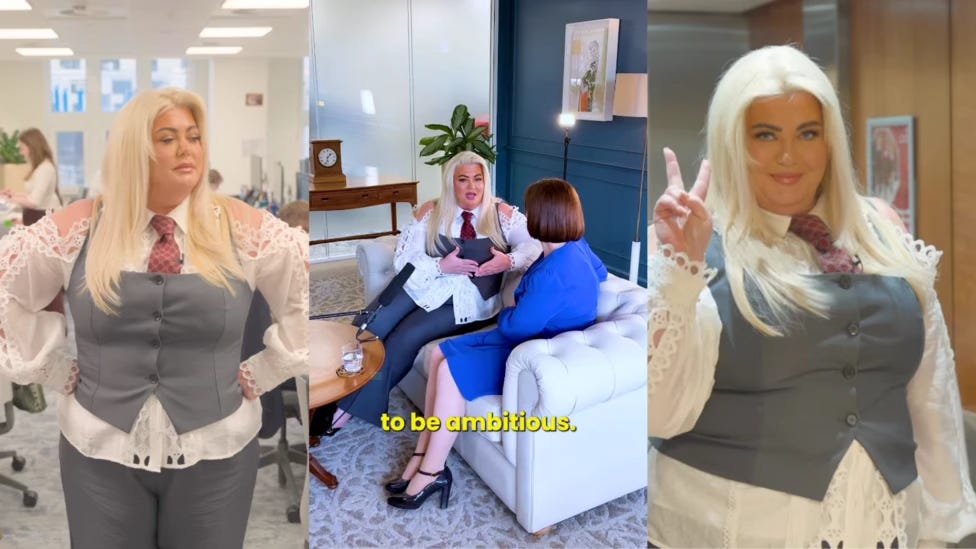
Except that people are REALLY ANGRY because Gemma Collins appeared in a social media clip for the Department for Education encouraging young people who have not done well at school to stay in education.
Some of the more favourable comments included "bizarre”, “tone-deaf”, “sickening” and “ridiculous”, while traditional media reported a “backlash” at this “vile publicity stunt”.
To be honest, the video made me cringe too, but here’s the important thing: I’m not the audience.
Those who were most critical - political opponents, right of centre newspapers, parents of children with special educational needs, and education trade unions - were not the audience either, although the latter two are important stakeholders for the Department.
I don’t know whether the people it was aimed at found it compelling or not. I do know that it has more than 2.6 million views on X, which I suspect is a lot more than an average Department for Education post, and that The Daily Mirror reported that 86% of the people who had seen it on Instagram don't follow the Department for Education account.
I spent a lot of time in Government trying (often unsuccessfully) to persuade Ministers that they shouldn’t front government digital content. When they did, people usually stopped watching in the first three seconds.
That is a reminder that while the message matters, the messenger often decides whether you get heard at all.
The measure of whether that clip worked should not be the reaction of the Department’s opponents. It should be whether it succeeded in reaching young people and changing their attitudes and behaviour.
It may not have done, but even if that’s true, the right response from Government is not to have a civil servant brief the Times Educational Supplement instead next time.
As Samuel Beckett famously wrote:
“Ever tried. Ever failed. No matter. Try again. Fail again. Fail better.”
The messenger is the message
Communications teams spend a great deal of time asking what they should say. They spend much less time asking who should say it.
That is odd because people do not assess messages in isolation. They look at the source and the surrounding signals. They ask, often without realising it, whether the person speaking is credible to them and close enough to their world to be listened to.
When I did A-level media studies (subject to its own furious media backlash in the 1990s), we had to read The Medium is the Message by Marshall McLuhan. I’m pretty sure it would put off most school leavers from staying in education.
Here’s an excerpt:
“Let us return to the electric light. Whether the light is being used for brain surgery or night baseball is a matter of indifference. It could be argued that these activities are in some way the “content” of the electric light, since they could not exist without the electric light. This fact merely underlines the point that “the medium is the message” because it is the medium that shapes and controls the scale and form of human association and action.”
His useful point could have been expressed much more simply: Content is not received on its own. Context changes the meaning. A message in a ministerial speech on a government website and one from a content creator on TikTok is not experienced as the same message - even when the words are the same.
Source credibility is one of the most well-researched forms of social influence there is. We are more likely to believe a claim when it comes from someone who is familiar to us, who we think is expert, or who we admire.
In a noisy information environment, where communication has become a contest for attention, having the right messenger matters.
I recently came across research on how source credibility influences how likely people are to be taken in by misinformation.
People were shown a series of social media posts created by researchers. Some posts appeared to be from conservative news outlets such as Fox News, some appeared to be from liberal outlets like The New York Times. The content of each was identical… and also deliberately wrong.
The researchers wanted to understand whether changing the source changes how likely people are to believe a misleading headline. Both liberals and conservatives judged misinformation to be more accurate when it came from a source with similar politics to them. They also judged information from sources that were politically opposed to them to be more biased.
In other words, we are more likely to believe a claim, even one that is false, when the source feels like “one of us”.
How to choose the right messenger
The Department for Education’s experience is likely to put off many communicators from experimenting. Not all will be confident that their CEO would support them in the face of such a media backlash. And that would be a shame because I firmly believe, as I have written previously, that working with content creators is a winning communications strategy today.
So how can you increase your reach without attracting attention for the wrong reasons?
A good approach starts with five tests:
Audience fit. Does the person have standing with the people you are trying to reach, rather than the people approving the campaign? Who follows their channels and why?
Message fit. Is there a credible reason for this person to be talking about this issue? A messenger does not need to be an expert but there does need to be a connection between their story, the audience and the issue you are talking about.
Tone fit. Can they say this in a way that is natural for them and their audience? If every line sounds like it was written by you, they will be seen as a corporate shill and you are unlikely to persuade the people you are trying to reach. How much control are you willing to give up in return for authenticity?
Stakeholder risk. Who might feel mocked, ignored or misrepresented by this choice of messenger? This is arguably where DfE got it wrong. Assessing stakeholder risk is not about giving every potential critic a veto. But it does mean considering seriously the likely response of people with a legitimate interest before going live. ‘The messenger is the message’ cuts both ways. The right messenger can make a message feel more familiar, credible and human. The wrong one can make it feel careless, patronising or unserious. Did the DfE judge that the response of SEND parents was a risk worth taking, or was the likely reaction missed?
Transparency. If someone is being paid, or the content is part of your campaign then that should be clear. The DfE and Gemma Collins said she had not been paid. Personally, I wouldn't have had a problem if she had been paid - if that was the best value for money route to reach the target audience. It would have drawn more criticism, but an element of paid media would also have reached the desired audience better than DfE’s own channels.
Conclusion
Credibility is not the same as expertise. The most credible messenger is not the person with the greatest formal authority (the minister, the chief executive) nor is it the person with the greatest expertise (the professor, the scientific expert). Sometimes that is true but often it is not.
Credibility is judged by the audience, not awarded by the organisation or its opponents.
It is partly about competence: do I believe this person knows what they are talking about? It is partly about integrity: do I believe they are being straight with me? But it is also about proximity: does this person understand people like me, speak like me, and see the world in a way I recognise?
A minister telling a young person to stay in education is unlikely to be heard. A content creator who didn’t succeed at school themselves may feel more authentic and believable. The serious question is whether Gemma Collins had more standing with the intended audience than the Department for Education or Bridget Phillipson. That is an empirical question. The answer can be judged by attention, understanding and behaviour among the target audience.
In a crowded and sceptical information environment, the right messenger can shape whether a message is noticed, believed and acted on. That means communications teams should spend as much time thinking about messenger choice as message choice.
Who says it is part of what is being said.


