



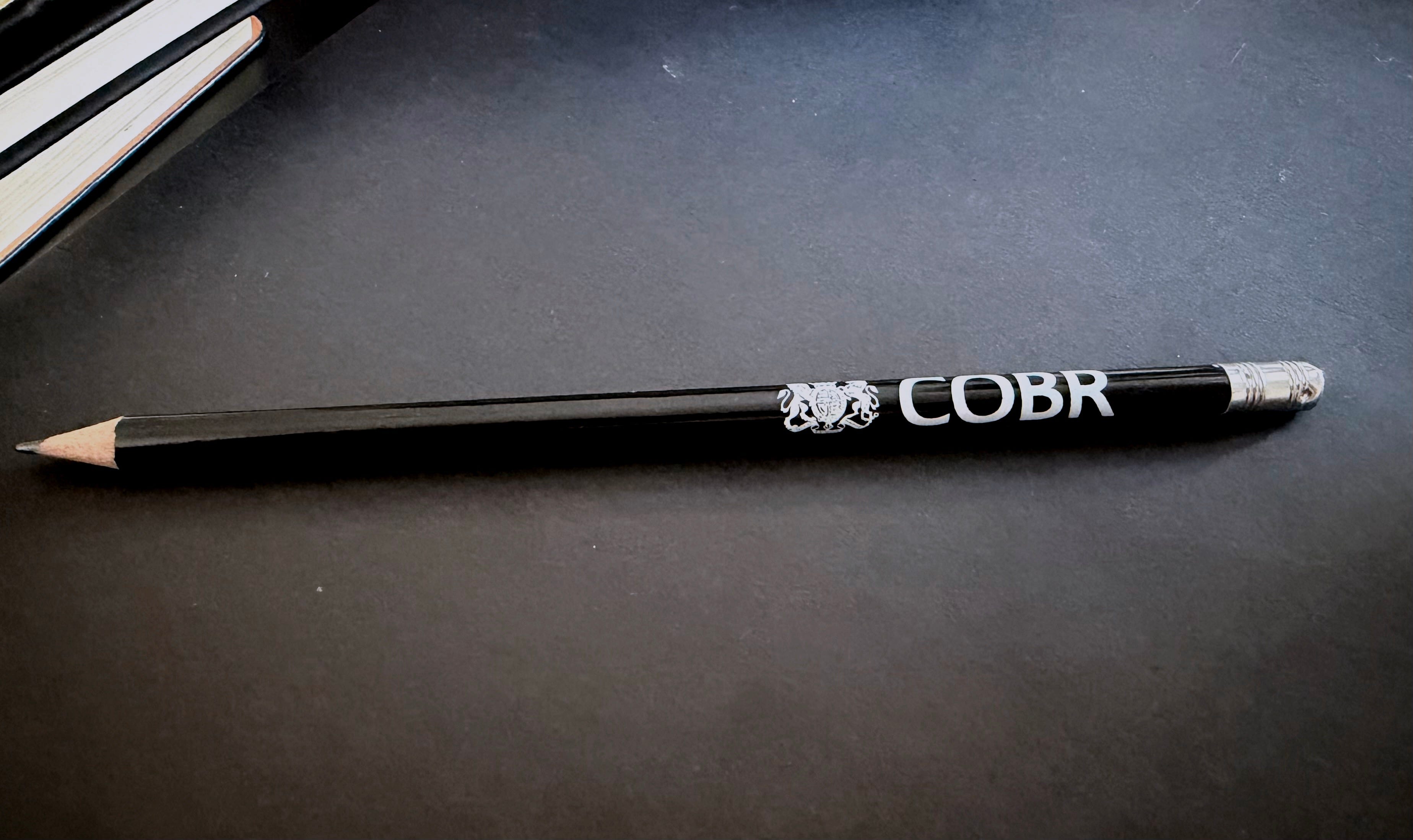
The first time I attended the Government’s emergency response committee, COBR, I barely slept. I had never even been in the room before. I hadn’t had any training. And the Prime Minister, who I had never met, would be chairing.
Gulp.
I wasn’t expecting to have a major part: I was the Director of Communications at the Department for Transport. But I was acutely aware that, as the musical Hamilton says, there is a room where it happens. And in a national crisis, COBR is that room.
I still can’t reveal the exact exchange when I was called on in that first meeting. But let’s just say it was a long way from the excitement of a TV drama and I may have given the Prime Minister a confidently delivered but not entirely accurate explanation for the abbreviation of a type of ferry.
It was an early lesson in the particular pressure of that room. At one level a Prime Ministerial COBR is about the scariest meeting a person can attend. Half the Cabinet is assembled around the table alongside the most senior officials in government. If you don’t have some form of imposter syndrome in that room then there’s probably something wrong with you.
At another level, it is somewhat underwhelming. There’s a lot more wood and a lot less glass than in the movies. But it does have digital clocks showing global time zones and big screens to beam in participants on secure lines. There’s an entirely unimpressive picture on Wikipedia.
So how does COBR work? What can communications leaders learn from it? And what did I decide was the most important element of crisis response after attending countless meetings? For obvious reasons, I have limited my descriptions of how COBR operates to already published government material.
What happens in COBR
In the movies, the Prime Minister sits directing every aspect of the response. If that happens something has gone seriously wrong.
Most of the action is being led elsewhere. The police respond to terrorism. Local authorities and emergency services manage floods. The Foreign Office supports British nationals overseas. The relevant department, agency or operational commander remains responsible for delivery.
COBR is not an operational command centre. It is a coordination meeting. It concentrates on the issues that can’t be resolved elsewhere. A good meeting does three things:
First, it establishes a Commonly Recognised Information Picture or CRIP.
In plain English:
What has happened?
What does it mean?
What is likely to happen next?
The information is drawn from departments, agencies, local responders, and open sources (such as the media and social media). It is distributed in advance, displayed on the screens and is always the first agenda item.
Like every crisis, the initial picture is often pretty murky and official information may not be much more complete than media reporting. The purpose is to establish what is known, what is uncertain and which assumptions matter most to the decisions about to be taken.
Second, COBR co-ordinates the response.
Crises cut across institutional boundaries. One department’s solution can quickly become another department’s problem. Closing transport links might reduce one risk while trapping people elsewhere. Evacuating an area creates demands for shelter, policing and public information somewhere else.
COBR brings those interests together. It allows problems to be escalated and conflicting actions to be reconciled. Information that might otherwise travel slowly through several organisations reaches the people with the authority to decide and the political power to unblock.
Third, the chair agrees the priority next steps and actions.
The paper that follows the meeting is concise. It sets out the decisions made, the actions, and who is responsible for delivering them. Ministerial COBRs carry the weight of cabinet decision making, and so departments are obliged to deliver on them.
The test of a good COBR is whether people leave with a better and shared understanding of the problem, fewer contradictions and a clear account of who will do what by when. A bad meeting can do the opposite, pulling operational leaders away from the response to service the centre.
Communications forms a part of each of COBR’s tasks. My first job was to provide intelligence about what the public, media and stakeholders knew, believed and were concerned about. Secondly, to help ministers understand how proposed decisions may be received. And finally, it was to turn decisions that were made into information that helped people to act.
Communications is not treated as an afterthought or a downstream presentational activity only. The Amber Book, provides the government’s framework for emergency response and is admirably direct about the value and importance of communications:
“Good two-way communications are critical to an effective response. Reliable information must be passed correctly and without delay between those who need to know, including the public.”
The focus of our public communications was not reassurance, but helping people make good choices by giving them timely and accurate information about the risk, what government was doing and what they should do next.
What matters most to a successful outcome
Over time, I realised that the quality of the crisis response was usually determined before anybody entered the room. COBR can bring fabled ‘grip’ to government institutions, but it cannot compensate for poor planning. The single biggest determinant of whether a crisis was well managed was pre-crisis preparation.
And some of the most useful meetings I attended happened before a crisis had ever developed. When you were busy, preparing for something that might never happen could occasionally be frustrating. But it was those preparatory meetings that forced people to compare their assumptions. They exposed gaps in plans, where more work was needed, and what information was missing. They allowed departments to take action while they still had time. Sometimes the risk receded. Sometimes this early action reduced it. Either way, the work was rarely wasted.
Given the volatile world we live in I am surprised companies don’t spend more time on crisis preparedness. Its value lies less in the plan itself than in the thinking, discussions and decisions required to produce it.
How to build your own COBR before a crisis
Communications leaders should be confident they understand three things before a crisis arrives.
1. What is your version of the CRIP?
Begin with the decisions leaders might have to make. What facts would determine those decisions? Where would they come from? How reliable would they be? How quickly could you obtain them? What would tell you that the situation was improving or deteriorating?
The operational picture is only part of that. Leaders also need to know what people are experiencing, which narratives are taking hold, where confusion is developing and what behaviour the response needs to encourage.
As a communications leader, you need the capability to understand all of that but also to condense it into a single page that can help leaders understand the few things that matter.
2. Who can decide when interests diverge?
Everyone should know who leads the response, who approves public statements and who takes over when people are unavailable. Clear command structures matter, but they are different from preparing for diverging interests.
Operations may want to keep a service running. Legal may want to say nothing. Customer teams may want immediate answers. Finance may resist the cost of remediation. Communications may believe delay is increasing reputational damage.
You need the structures and mechanisms to reconcile those interests and make the whole organisation act as one - both at a company-wide level and within your team.
3. Have you rehearsed the decisions, not just the messages?
Many organisations discuss risks without identifying the points at which monitoring needs to move to action. When would you notify the board, regulators, employees or customers? What would justify suspending a service, recalling a product or advising people to change their behaviour?
Those thresholds will rarely be mechanical - you can’t necessarily decide them in advance because the context will be essential to the judgement. But discussing these types of issues beforehand makes delay in the moment less likely. This is where a pre-mortem is useful. Imagine that the crisis response has failed badly. Work backwards and ask what caused the failure.
You will be surprised at how many things that seem obvious to you look different from a colleague’s perspective. That’s an argument to have and resolve before the crisis hits.
Preparation is the real crisis capability
My first appearance in COBR depended on my ability to improvise a nearly correct answer about ferries. That is not a crisis management system I would recommend.
Having your own version of COBR matters. It creates a shared picture, brings authority to bear where there are conflicting interests and helps a large machine move in one direction. But the room can only really work with what people bring to it.
The best meetings were those where the right people already understood the problem, each others’ priorities and constraints, and had considered the difficult choices ahead of time.
Hamilton was right. There is a room where it happens. But, in my experience, the most important work happens before anyone takes their seat.
How to run a pre-mortem

About 12 months before the 2024 General Election, the Cabinet Office Executive Committee held an unusual version of its weekly meeting. We held a pre-mortem.
5 steps for an off-the-shelf crisis plan

This is a simple toolkit for how to respond to a crisis when you don’t have a plan, laid out in five simple steps.


