



Saturday marks the 250th anniversary of the United States’ Declaration of Independence. Most articles will be about Washington, Jefferson and Franklin.
Communications leaders may learn more from Samuel Adams.
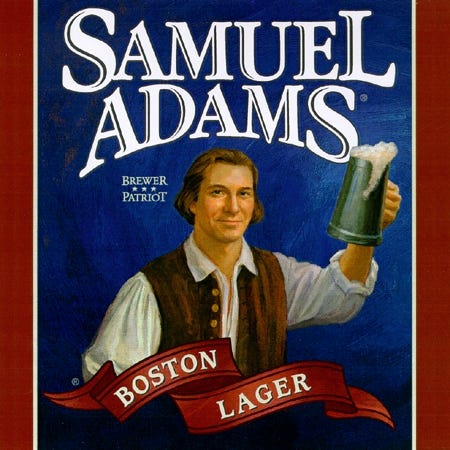
I’ve had an interest in Adams since I worked in Washington DC in 1997. The only half decent beer available at the time bore his name, and every bottle carried the insignia “Brewer. Patriot”. He may have been both of those. He was also a dangerous, disingenuous and highly effective propagandist. He fermented hops and fomented revolution.
Samuel Adams fought dirty. He twisted facts for his own ends. He played on emotion and grievance. He understood his audience and what would push their buttons. He knew how to turn communication into action.
He saw something that many leaders miss today. A dispute is not won only by being legally right. The court of law and the court of public opinion ask different questions.
Here’s a story about how relying on lawyers to fight a propaganda battle helped lose the colonies, how Britain could have played it differently, and the lessons it holds for communications leaders today.
The massacre that became a message
Six years before the Declaration of Independence, British soldiers were stationed in Boston, Massachusetts. They were there to restore order because locals had reacted very badly to having tariffs placed on goods imported from Great Britain. Unlike today, ‘tariff’ wasn't the most beautiful word in the dictionary for early American leaders.
The Boston Massacre, or the Incident on King Street if you were British occurred on 5 March 1770.
Exactly what happened has been disputed since the day itself. What is known for sure is that eight soldiers faced a hostile crowd. There were insults, threats and objects thrown. And the British soldiers opened fire, killing five colonists.
Almost immediately a propaganda battle began between those opposed to the British Crown (the Patriots) and those loyal to it (the Loyalists). The two approaches were very different.
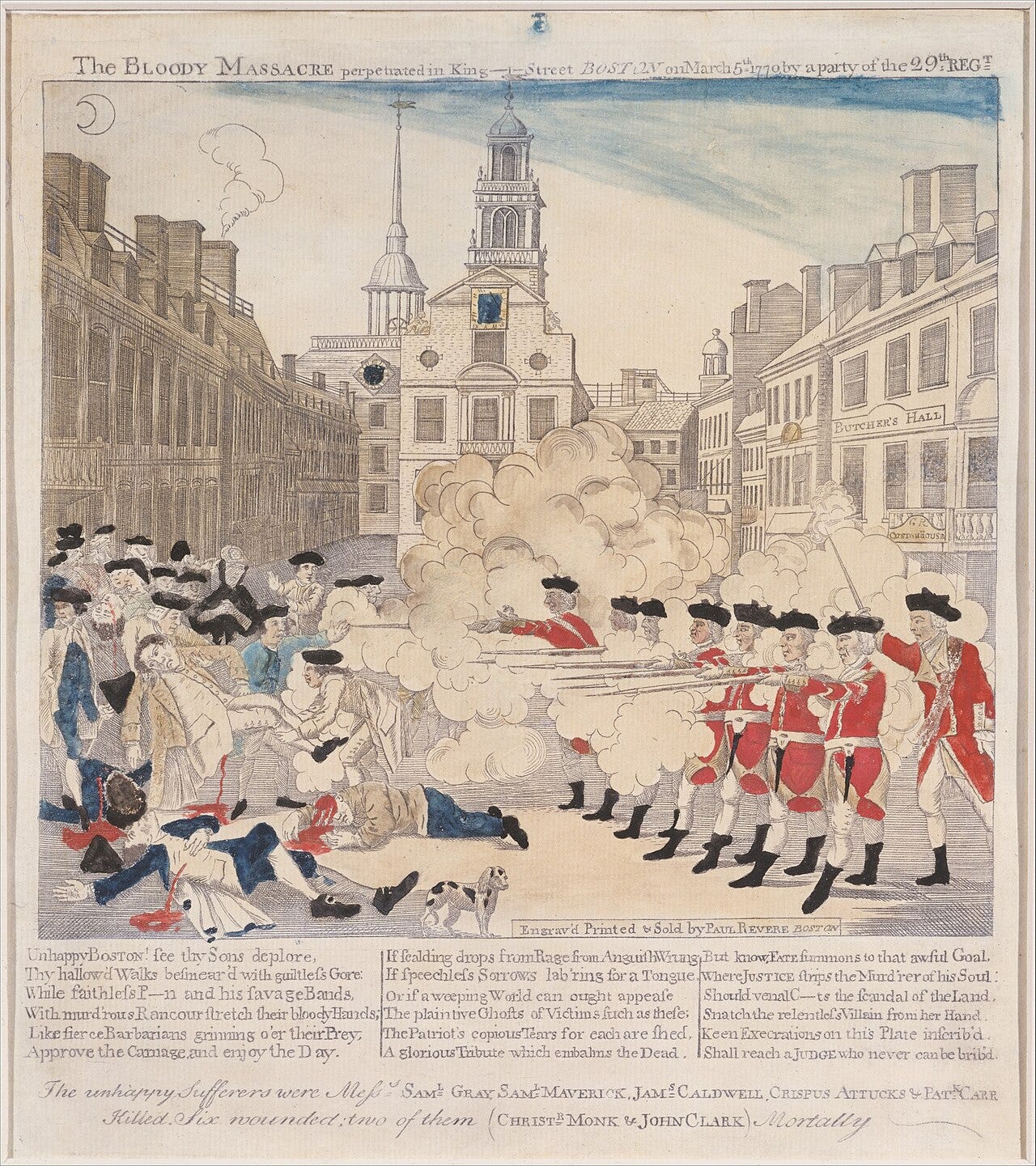
For the Patriots, the event was an opportunity to present British tyranny. Samuel Adams quickly helped turn the deaths into “the Boston Massacre”. The silversmith Paul Revere then created an engraving, giving his version of events. The British stand in military formation, ordered to fire at a defenceless crowd while another musket pokes from a building labelled “Butcher’s Hall”. The image compressed a messy and confusing event into a simple moral story: armed troops, innocent civilians, imperial brutality.
The British pursued a different approach. They promised that there would be an inquiry. The British soldiers were indicted for murder. And the Government determined that there must be a fair trial judged by a jury, believing this would prevent moderate colonists from joining the Patriot cause.
The soldiers on trial were represented by John Adams, a leading Patriot who later became the second President of the United States. The jury agreed with his argument and acquitted six of the eight. The other two were convicted of manslaughter, rather than murder.
In the court of law that mattered. But the Government’s belief that due process would prevent a rise in Patriot support could scarcely have been more wrong.
In the court of public opinion, Samuel Adams’ propaganda had reached halfway around the world before John Adams’ legal arguments had got their boots on. John Adams himself later wrote that the incident was the day “the foundation of American independence was laid.”
The British didn’t completely ignore the need to make their case to the public. But pamphlets such as “A Fair Account of the Late Unhappy Disturbance in Boston”, which drew mainly from the account of the soldiers, was distributed after the Patriots’ propaganda, and sought to blame Bostonians for denying the validity of Parliamentary laws, were unlikely to swing many.
What followed showed Adams’ deeper communications genius. He was the brain behind the Committees of Correspondence - an underground network of communication that catalogued British abuses and shared arguments - first with other towns in Massachusetts and then across the Thirteen Colonies. The comparison with social media can be pushed too far, but these were real peer-to-peer sharing networks. Grievance moved from town to town, carried by people who already trusted each other.
The lessons for modern communication leaders
Facts, evidence and law all matter. But they do not necessarily settle the meaning of an event. By the time a legal process has concluded, the public may long since have reached their conclusion.
That conclusion may be unfair. It may be partial. It may ignore context. But once it becomes the organising story, every later fact has to fight its way through it.
Lawyers sometimes assume the public and the media will wait for the full process. They believe being found to be right in a court of law will beat the emotion of a story. When it does not, they can see the result as a communications failure.
That is unfair, but understandable. Lawyers are trained to protect the formal case. Communicators are trying to protect trust while the formal case unfolds. Both matter. The trouble starts when either side forgets that a true victory for the client has to survive both the courtroom and the public square.
A business may win an employment tribunal and still look callous or bullying. It may be cleared by a regulator and still lose the trust of customers. It may successfully sue a critic and do its reputation more damage than did the original accusation. None of these is “fair”. But neither print nor social media have a duty to be fair. Freedom of speech extends to freedom to twist the truth.
The smartest law firms now recognise this. Having acted for one too many clients who found themselves victorious in court, but traduced on social media, they have set up their own communications arms to advise clients alongside their lawyers. They recognise that a pyrrhic legal victory isn’t good for anyone.
How to avoid the mistakes of the British
Let’s go back in time. Let’s make America Great Britain again! Imagine the British authorities had understood in 1770 what most organisations still learn too late: the legal case is only one part of the argument. The public argument starts earlier, moves faster and plays by different rules. What could they have done differently?
The first thing they might have done is separate the trial from the story.
The soldiers were entitled to due process and the government was right to insist on it. But due process answered only one question: had these men committed murder? It did not answer the bigger and more important question being asked by many Bostonians: what did the deaths say about British rule?
Modern organisations make the same mistake when they hide behind process. “We are conducting a full investigation” may be true and necessary. But it rarely satisfies people who are asking a moral question. Do you understand what happened? Do you care? Are you taking responsibility?
The second thing the British might have done is move faster on meaning.
I am not arguing that they needed to prejudge the trial. But they did need to speak to the human reality of five dead civilians and a city close to boiling point. They could have acknowledged grief, fear and anger. They could have explained what they knew, what they did not yet know, and what would happen next. They could have shown they understood that the event was not just a legal matter but a public trauma.
Lawyers worry, understandably, about liability. But legal risk is only one element. Silence brings risk too. In the absence of a careful account, people will supply their own. By the time the official position is known, the public may already have a simpler and more damaging story. There is a role for third party voices. Who are the trusted experts, former leaders, or independent voices who can give a more balanced view to the media without undermining your legal position?
The third thing the British might have done is understand the grievance beneath the incident.
The Boston Massacre travelled because it attached to a sense of grievance that was already alive. Samuel Adams knew that many colonists already felt overtaxed and disrespected. He fed that fire, but he did not have to create that feeling from scratch. He had to nurture it and then convert it into action.
This is how hostile narratives work. They do not usually begin with a wholly fabricated claim. They start with something real. Then the propagandist strips away complexity, attaches the event to an existing grievance, and offers the audience a simple conclusion.
Understanding the suspicions that already attach to your organisation allows you to plan properly. You can think through how a claim about misconduct might attach to doubts about culture, or how a row about executive pay might attach to anger about fairness. The individual claim may be distorted, but your underlying vulnerability may still be real.
The fourth thing the British might have done is avoid inadvertently confirming the Patriot story.
Troops on the streets were meant to restore order. To Patriots, they proved oppression. Legal firmness was meant to show due process. To critics, it looked like arrogance, perhaps even a rigged system. Even the British name for the event, the “Incident on King Street”, sounded uncaring when set beside the “Boston Massacre”.
Modern organisations fall into the same trap when their response becomes evidence for the prosecution. A heavy legal letter can make a company look bullying. I was once asked to produce a forceful media statement for an employment tribunal in which a junior member of staff had accused the leader of the organisation of bullying. I had no doubt the leader was justified in their conviction that the claim was baseless. What they couldn't see was that the power imbalance changed how their response would be read. A disparaging statement could add credence to the claimant’s story. Sometimes the rebuttal strengthens the accusation.
Conclusion
The British had law, process and authority. Adams had grievance, speed, networks and a story people were ready to believe.
Samuel Adams is worth studying because he understood something many institutions still struggle to grasp: shaping public opinion often matters more than proving your case.
As the USA marks the 250th anniversary of its Declaration of Independence, Adams is worth remembering not only as a brewer and patriot, but as a warning to every institution that thinks being legally defensible is enough.
In fact, technically Samuel Adams was a maltster not a brewer, and some people think the image on the bottle is actually Paul Revere. But I’m sure Samuel, of all people, wouldn't have wanted inconvenient facts to get in the way of a good story.


